I'M MAKING DIET
CHANGES for mash
Learn about the Mediterranean diet, a healthy way of eating inspired by the habits of people living in the Mediterranean area.
Eating for liver health can be delicious
What is the Mediterranean diet?
The Mediterranean diet is a term used to describe traditional eating styles from countries surrounding the Mediterranean Sea. While these cultures have their own unique differences and dishes, there are many common features as a whole. The Mediterranean diet is a great example of healthy eating you can discuss with your HCP. Let's dig in!

The most studied diet for people living with MASHThe Mediterranean diet is recommended by HCPs as well as organizations such as the American Liver Foundation. This diet is recommended as a way to reduce some of the risk factors associated with fatty liver disease. One study showed the Mediterranean diet decreased fat in the liver, even without weight loss. Some people have seen improvements in liver enzymes and triglyceride levels. It's also beneficial in helping manage other metabolic conditions. |
The Mediterranean diet includes: |

Extra virgin olive oil

Fresh vegetables and fruits

Nuts and seeds

Whole grains

Legumes and beans

Fish and seafood

Eggs and egg whites

White meat
The Mediterranean diet limits:
- Red and processed meat
- Fried and fast foods
- Refined grains
- Foods high in saturated fat
- Trans fats
- Sugar-sweetened beverages
- High-fructose corn syrup
See the Mediterranean diet in action
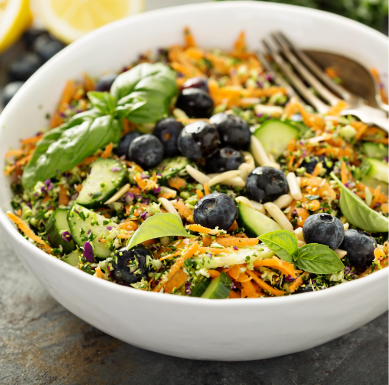
Kale and Fresh Berry Salad
Did you know kale can make a hearty, satisfying base for salads? Thanks to its sturdy leaves, kale holds up well after dressing, so your salad stays crisp. In this recipe, the slight bitterness of kale is balanced with juicy blueberries and the bright pop of pomegranate seeds. Toasted nuts and seeds add crunch, while fresh mint brings a light, refreshing finish. This colorful salad is a great source of flavonoids, vitamin C, antioxidants, and resveratrol.
Serves 4
Ingredients
- 3 bunches kale, stems removed and leaves chopped
- 1 cup fresh blueberries
- 2 medium carrots, peeled and shredded
- ½ cup pomegranate seeds
- ⅓ cup pumpkin seeds, toasted
- ⅓ cup sliced almonds, toasted
- 1 tablespoon fresh mint, finely chopped
- ½ cup lemon-olive oil vinaigrette
- Salt and freshly ground black pepper, to taste
|
Directions
In a large bowl, combine the kale, blueberries, carrots, pomegranate seeds, pumpkin seeds, almonds, and mint. Toss to evenly distribute the ingredients. Drizzle with the vinaigrette and toss again until well coated. Season with salt and pepper to taste, and serve immediately.
|

EATING HEALTHY FAQS
Find answers to common questions about MASH, diet, and how to eat healthier.
The information provided is for educational purposes only.